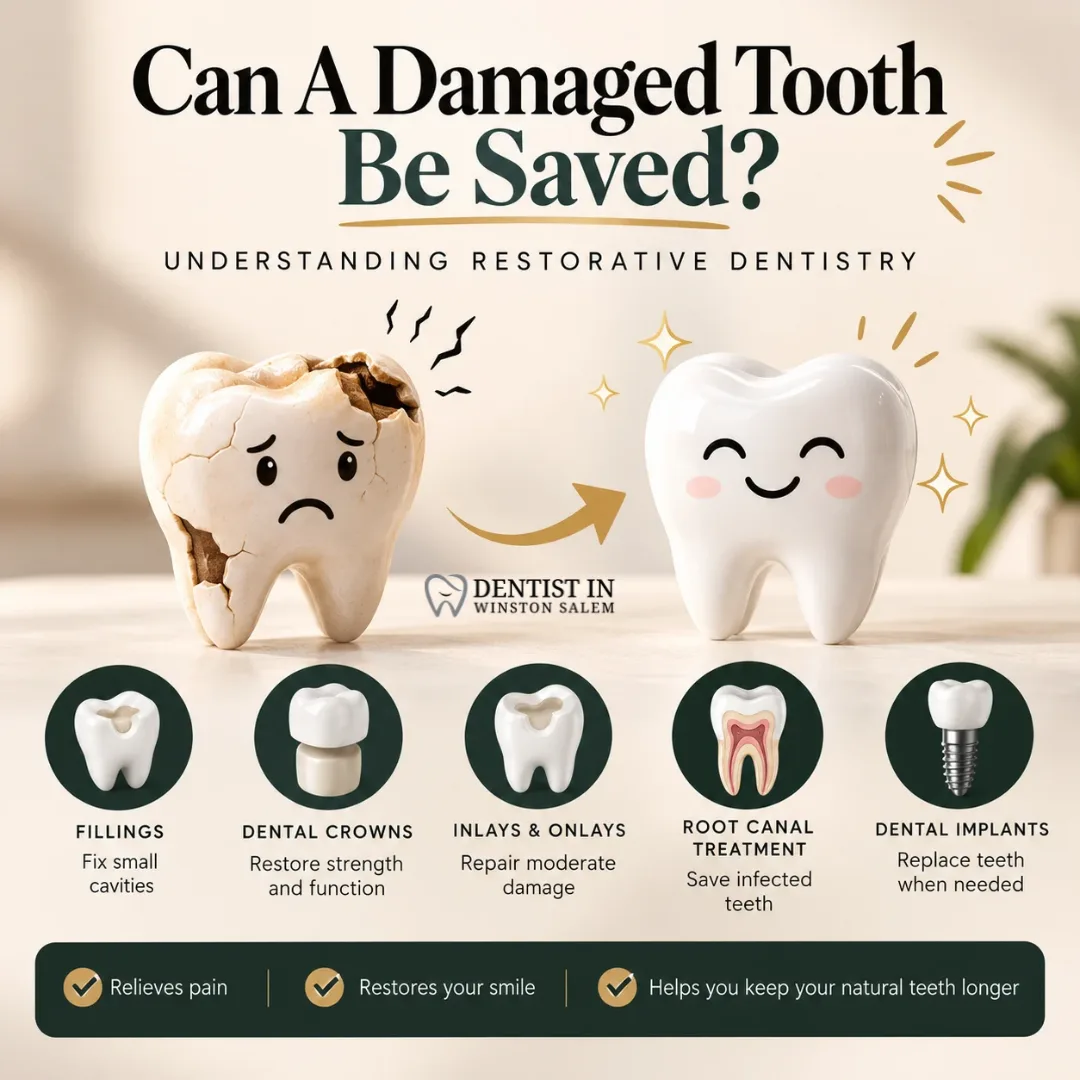
A cracked, aching, or darkened tooth can make anyone tense. Many people wonder if a damaged tooth can be saved or if extraction is the only choice. Restorative Dentistry offers practical fixes for decay, fractures, and wear.
Not every damaged tooth needs to be pulled; many can be restored with modern treatments.
Here you will know the common signs that a tooth needs help. It will explain fillings, crowns, root canals, and implants in plain terms. It will show which factors decide if a tooth can be saved and when extraction is necessary.
Restorative dentistry repairs or replaces damaged and missing teeth to restore tooth function and oral health. Dentists treat decay, fractures, wear, old fillings, grinding damage, and accident injuries.
Many damaged teeth do not need extraction; modern treatments often save them. Crowns and root canals can fix severely damaged teeth. Fillings handle smaller decay and fractures. Restorative care can improve shape, color, and appearance while restoring strength and function.
The key factor in saving a tooth is how much healthy tooth structure remains above the gumline. Even a badly damaged tooth can be salvageable if enough sound structure exists. Prosthodontics and endodontics work together to offer repair, rehabilitation, and restoration in many difficult cases.
A damaged tooth often can be saved. Modern restorative dentistry offers many options.
Restorative dentistry offers a variety of procedures to bring back smiles and function. Patients often turn to dental crowns, fillings, and root canals for help. Each method aims to fix damage caused by decay or injury.
Dentists use fillings to repair teeth with decay, small fractures, or wear. A filling restores shape, color, and tooth function after decay or old filling failure. Many damaged teeth do not need extraction, and a simple filling can stop decay early.
Severe damage may still be saved with crowns or root canals, not just removal. The key factor for salvage is how much healthy tooth structure remains above the gumline. Restorative dentistry focuses on repairing or replacing damaged or missing teeth to improve oral health and function.
Crowns and bridges play crucial roles in restoring damaged teeth. They tackle problems like tooth decay, fractures, or wear. A dental crown fits over a damaged tooth, reinforcing its strength while improving appearance. This procedure can save many teeth that might otherwise need extraction.
Bridges help fill gaps left by missing teeth. They connect to surrounding healthy teeth for stability and function well for chewing and speaking. Both crowns and bridges enhance the overall look of smiles while boosting confidence. Many patients find these treatments improve not just their oral health but also their quality of life.
Root canal therapy salvages teeth with damaged pulp. This procedure helps treat infections or decay that reach the inner part of a tooth. Dentists clean out the infected area and seal it to prevent further problems.
Many people worry about pain, but modern techniques make this process much more comfortable than expected. With proper care afterward, a root canal can restore strength and functionality.
Even severely damaged teeth can benefit from root canals. If enough healthy structure remains above the gumline, dentists often recommend this treatment instead of extraction. A tooth may have deep decay or cracks yet still be salvageable through careful restoration methods like crowns following the procedure.
Patients frequently find their natural smiles improved after these therapies, blending health with aesthetics seamlessly.
Dental implants offer a strong solution for missing teeth. They consist of titanium posts that dentists place into the jawbone, mimicking natural tooth roots. This modern procedure focuses on restoring both appearance and function. Many patients find that their chewing ability improves with these implants.
Even severely damaged or lost teeth can often be replaced through this method. If enough healthy structure remains, dental implants may provide a long-lasting option. Restorative dentistry uses these solutions to enhance oral health significantly. With an implant in place, patients enjoy improved confidence and better overall functions in daily life.
Can a damaged tooth receive a second chance? Many factors influence this outcome, including the extent of decay or fracture.
A dentist decides if a tooth can be saved.
| Factor | What It Means | Why It Matters | First-Hand Note |
|---|---|---|---|
| Amount of Healthy Structure | How much tooth remains above the gumline. | Enough healthy structure is the key factor in saving a tooth. | The dentist once saved a front tooth with a crown because enough enamel stayed intact. |
| Location of Damage | Is the break on a molar, premolar, or front tooth? | Molars take more force, so they need stronger restorations like crowns or bridges. | A patient kept chewing after chipping a molar and later got a full crown that restored function. |
| Root and Pulp Condition | Is the nerve infected or healthy? | Many severely damaged teeth can be saved with root canal therapy when the pulp is affected. | A clinician performed a root canal and crown on a cracked tooth and avoided extraction. |
| Gum and Bone Support | Is there enough bone and gum to hold the tooth? | Good support increases the chance of long term success for restorations and implants. | The team rebuilt bone around a damaged premolar before placing a crown. |
| Extent of Decay or Wear | How deep is the decay or how worn is the tooth? | Dentists can restore teeth affected by decay, old fillings, and wear using fillings or crowns. | An older filling was replaced and a crown was added to strengthen a worn molar. |
| Previous Restorations | Has the tooth had many large fillings or past root canals? | Multiple or large restorations can reduce remaining healthy tooth structure. | A long treated tooth needed a crown after years of big fillings to regain strength. |
| Patient Health and Habits | Does the patient grind teeth, smoke, or have diabetes? | Health and habits affect healing and long term success of restorative work. | A grinder got a night guard first, then a crown, which extended the restoration life. |
| Time Since Injury or Decay | How long the problem went untreated. | Earlier treatment often preserves more teeth and avoids extraction. | A clinic restored a cracked tooth months after trauma with a root canal and crown, saving it. |
| Patient Goals and Budget | Does the patient want the most durable or the least invasive option? | Choices range from fillings to implants; cost and preference guide the plan. | A patient chose a bridge for budget reasons, rather than an implant. |
Teeth may need extraction if they suffer severe damage. A tooth might also require removal when decay reaches deep layers, causing significant structural issues. Some patients find themselves in situations where years of chewing wear down a tooth.
Others may have old fillings that no longer provide adequate support. When dentists evaluate these cases, they check for healthy structure above the gumline. If too much is lost, extraction often becomes necessary.
In other instances, trauma or accidents can shatter a tooth beyond repair; certain fractures render treatment impossible. For instance, an athlete once faced such an issue during a match and had to get multiple teeth extracted due to severe breaks.
Many factors influence whether restoration is viable or not. Dentists assess each situation carefully before deciding on extraction versus restorative techniques like crowns or root canals.
Each case tells its own story; sometimes saving the tooth isn't possible despite best efforts invested in dental care.
Restorative dentistry offers significant advantages for oral health. It helps people regain tooth function and prevents further damage to their smiles.
Restorative dentistry brings life back to damaged teeth. A dentist can repair tooth decay, fractures, or wear with several treatments. Dental crowns and root canals often restore a tooth's strength and function. These options improve shape and color while enhancing overall appearance.
The health of the remaining tooth structure plays a key role in whether restoration is possible. If enough healthy tissue exists above the gumline, many severely damaged teeth can still be saved.
Modern techniques make it possible to address issues from grinding or accidents effectively, keeping smiles intact.
Preventing further damage to a tooth is crucial. Early intervention can save many severely damaged teeth. Many teeth, affected by decay or fractures, can still be restored with modern techniques like dental crowns or root canals.
A dentist will evaluate the health of the remaining tooth structure above the gumline. If enough healthy tissue exists, they can proceed with restorative treatment options.
Patients should practice good oral hygiene at home to support their dental care efforts. Regular brushing and flossing help keep decay at bay and maintain overall oral health. Scheduling routine check-ups allows dentists to catch issues early on, preventing costly repairs in the future.
Proper care today ensures that damaged teeth do not face more serious consequences tomorrow.
Yes, many damaged teeth can be saved through restorative dentistry. Treatments like fillings, crowns, or root canals help repair and restore function.
Tooth damage can happen from cavities, trauma, or grinding your teeth. Poor dental hygiene also plays a big role in weakening teeth over time.
Restorative dentistry focuses on fixing issues with your teeth. Dentists assess the damage and recommend treatments based on the condition of each tooth.
If you notice pain, sensitivity, or visible damage, it’s time to visit your dentist. Early action is key; waiting could lead to more serious problems down the line.
Tell us a little about what you need — we'll be in touch shortly.
3210 Silas Creek Pkwy, Suite-4, Winston-Salem, NC, 27103, United States

Hi! I'm Tooth fairy! Your AI Assistant Ask me anything