Many people want straighter teeth but dread the idea of metal braces. They worry about comfort, about what they can eat, and about how hard cleaning becomes. Others are dealing with crowding or a bite problem that is already affecting their dental health.
Invisalign uses clear aligners that you take out to eat and brush, which makes oral hygiene far easier than it is with fixed braces. It can treat crowding, spacing, and many mild to moderate bite issues. Below, we explain how the treatment actually works, list the honest pros and cons, and compare it to traditional braces so you can decide what fits your situation.
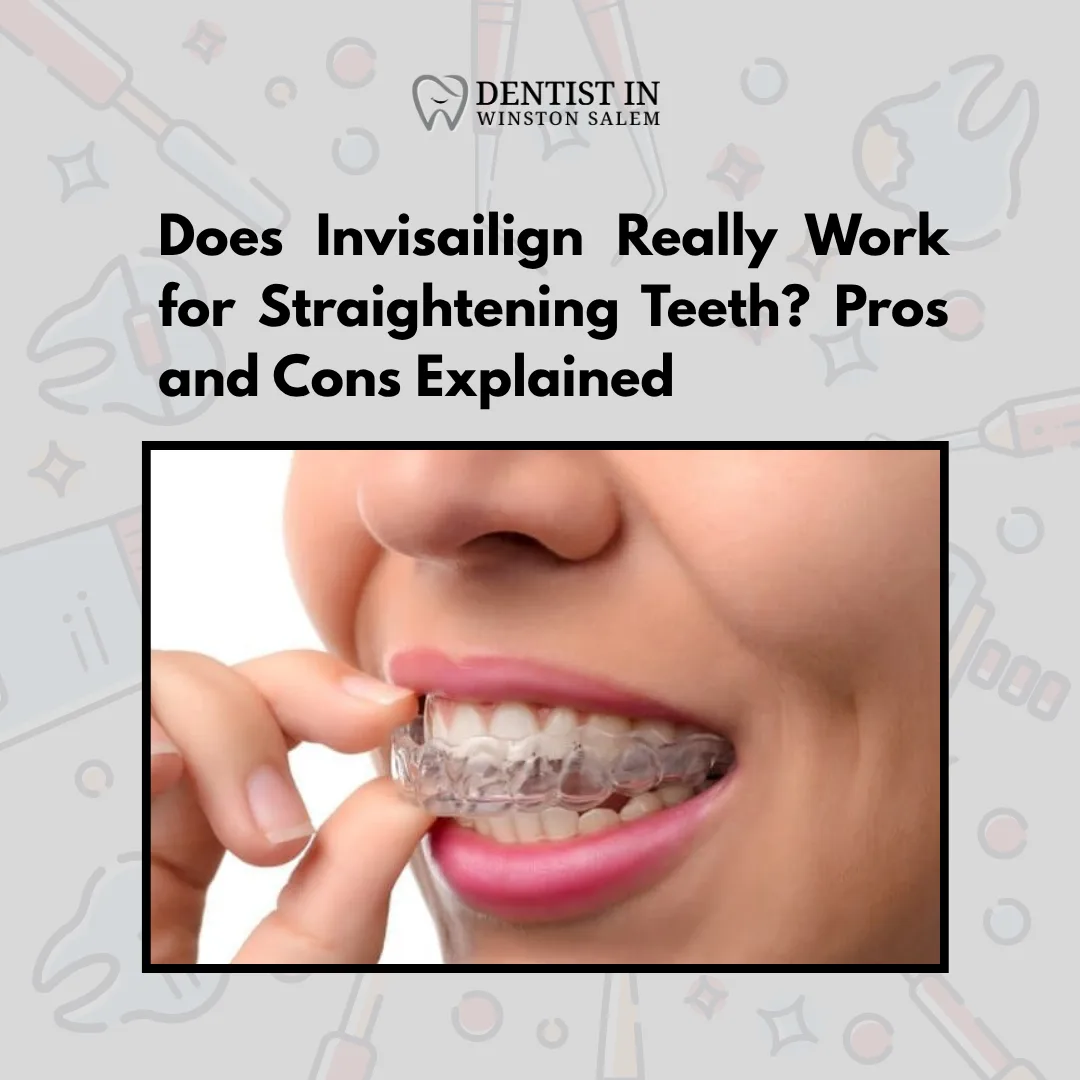
Invisalign aligners work by gradually shifting teeth into their proper positions. You wear a series of custom-made clear aligners, switching to a new set roughly every one to two weeks.
Each set applies gentle pressure to specific teeth, correcting misalignment over time. This process can address a range of orthodontic concerns, including crowding, spacing problems, and mild to moderate bite issues.
Invisalign is the most doctor-recommended clear aligner brand, and many patients report a more comfortable experience than they expected compared with traditional braces. Because the aligners are removable, brushing and flossing stay simple, which supports better oral health throughout treatment. You can read more about the treatment on our Invisalign page, or see the full range of options under orthodontics.
Invisalign has one significant catch: it only works if you wear it. Aligners need about 20 to 22 hours a day to stay on schedule, and that level of discipline is harder than it sounds. Taking trays out for meals, snacks, and coffee adds up quickly, and forgetting to put them back in stalls progress.
| Factor | Invisalign | Traditional Braces |
|---|---|---|
| Appearance | Clear and hard to notice | Visible brackets and wires |
| Removable | Yes — for eating and cleaning | No — fixed to the teeth |
| Oral hygiene | Brush and floss normally | Requires cleaning around brackets |
| Comfort | Smooth plastic, fewer irritations | Wires can irritate cheeks and lips |
| Food restrictions | None — trays come out | Avoid sticky and hard foods |
| Best suited for | Mild to moderate cases | Severe crowding and complex bites |
| Depends on patient effort | Yes — 20 to 22 hours daily | Works continuously on its own |
Both approaches aim for the same outcome — teeth that fit together properly and a smile you are comfortable showing. The right choice depends on how much movement your case needs and how realistic daily aligner wear is for you.
Invisalign works well for many people, but it is not the best choice for everyone. Start with the type of problem you are trying to correct. Clear aligners handle crowding and spacing well, and they can manage mild to moderate bite problems. Severe cases usually need fixed braces or a combined approach.
Next, be honest about the daily commitment. Aligners have to be in your mouth for most of the day, and that is the single biggest factor in whether treatment finishes on time.
Finally, weigh comfort and lifestyle. Most patients find aligners more comfortable than metal brackets and wires, and the ability to remove them makes cleaning your teeth much easier. If you play sports, sing, or speak publicly, the removability can matter as well.
At Dentist in Winston Salem in Winston Salem, NC, we start with an exam and a digital scan to see exactly what your teeth and bite are doing. From there we tell you honestly whether clear aligners will get you the result you want, or whether braces are the better tool for your case — and we walk you through timing, cost, and financing before you commit to anything.
If you have been putting off straightening your teeth, a consultation is the fastest way to find out what is actually involved. Call 336-802-1894 or book an appointment online with Dentist in Winston Salem — Winston Salem, NC.
Yes. Invisalign and other clear aligners straighten teeth for many patients by applying steady, controlled pressure that moves teeth into better alignment. They work best for mild to moderate misalignment and some bite issues. A dentist or orthodontist examines your teeth and builds a treatment plan before you start.
Clear aligners are removable and generally more comfortable, and they make brushing and flossing easier. Fixed braces stay on the teeth and can correct severe crowding and complex bite problems that aligners cannot. Braces also require more maintenance and have food restrictions, while aligners depend on you wearing them consistently.
People with mild to moderate misalignment, crowding, or spacing tend to do well with Invisalign. Patients with severe crowding or significant bite discrepancies may need fixed braces or another form of treatment. An orthodontic evaluation determines the best option for your case.
The advantages are comfort, removability, a discreet appearance, and easier oral hygiene. The drawbacks are that they require discipline to wear 20 to 22 hours a day, the trays need daily cleaning, and they may not correct every alignment or bite issue.
Aligners can improve dental health by correcting alignment, which makes teeth easier to clean long term. Because the trays come out, you can brush and floss normally during treatment. You do need to clean the trays daily and maintain good hygiene to avoid decay and gum problems.
Treatment time varies with the complexity of the case and often runs from several months to about a year and a half. You wear the aligners roughly 20 to 22 hours a day and change trays on the schedule your provider sets. Regular check-ins are part of the plan, and retainers are needed afterward to keep teeth from drifting back.
Tell us a little about what you need — we'll be in touch shortly.
3210 Silas Creek Pkwy, Suite-4, Winston-Salem, NC, 27103, United States

Hi! I'm Tooth fairy! Your AI Assistant Ask me anything