
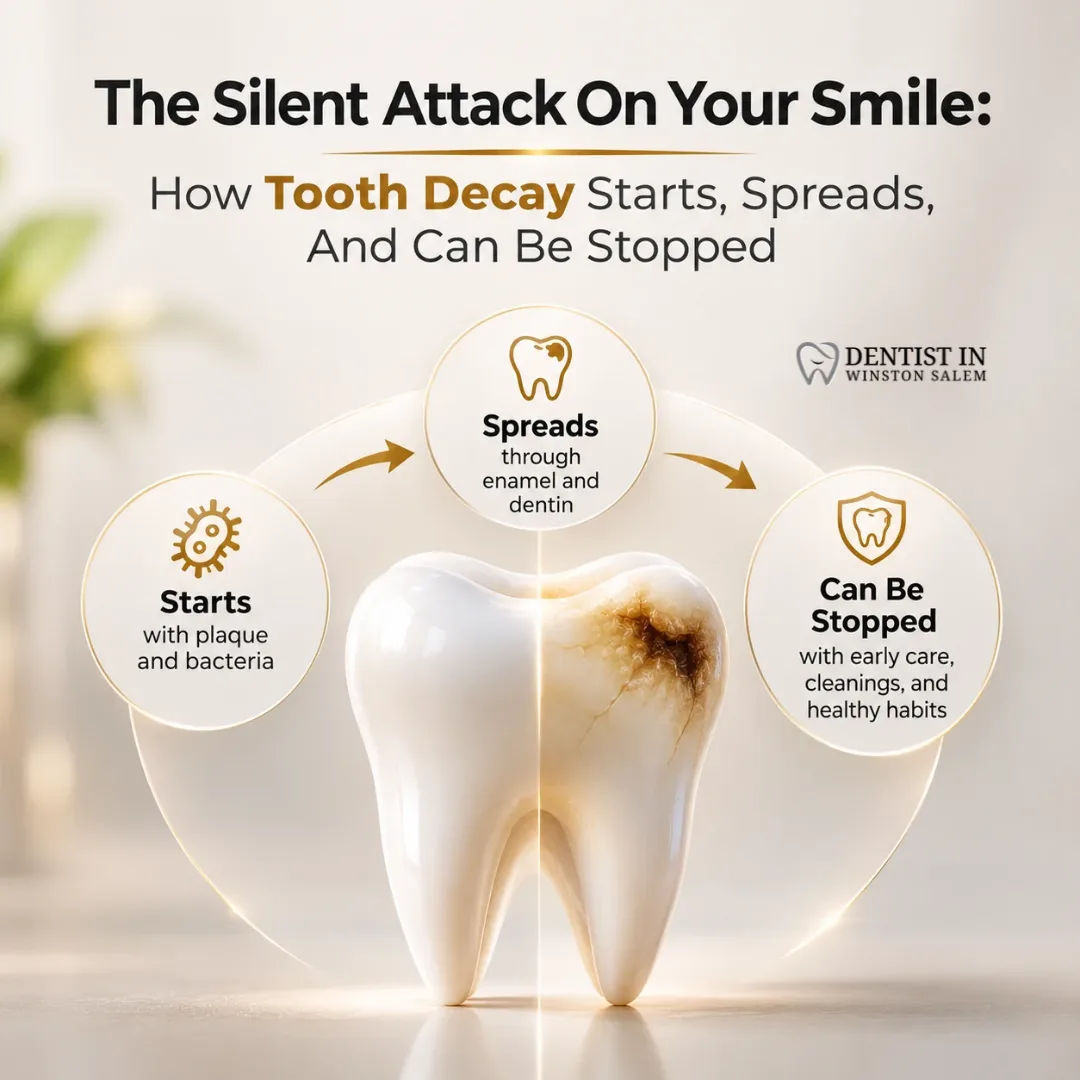
Many people wake to a sharp twinge or spot a dark dot and worry about a cavity. They fear the slow, quiet damage that hides behind a bright smile. Plaque, sugar, and unseen acids do a lot of harm before pain shows.
Sugar produces acid in the mouth, and that acid wears away tooth enamel. Here you will know how decay starts, how it sneaks deeper, and how to stop it with simple habits and timely care.
Tooth decay begins with plaque buildup. Bacteria in the mouth thrive on sugary foods, producing acids that attack tooth enamel. Early signs include white spots and discoloration that often go unnoticed.
Plaque forms fast after eating sugary or acidic foods. Bacteria in the mouth feast on sugars and make acid. That acid attacks tooth enamel and erodes it over time. Plaque plus sugar speeds up decay.
Some medicines can dry the mouth or lower saliva, which helps bacteria and raises cavity risk. Acidic drinks and foods hide as common causes of damage. Cutting sugar is one of the best prevention moves for dental health and cavities.
White spots mark the first visible stage of decay, stage one of five total stages. Cavities can stay silent and show no pain for a long time. The decay spreads through enamel like termites through wood before it hurts.
Early treatment of infections can save a smile and prevent abscesses or nerve damage. These points lead into the role of acids in enamel erosion.
Bacteria feed on sugars and make acid. This acid attacks tooth enamel and starts decaying. Sticky plaque mixed with sugar speeds that process. Acidic foods and drinks add extra acid. Some medicines harm teeth and raise risk.
Erosion moves quietly through enamel, like termites eating wood. The first sign can be a white spot on a tooth. Tooth decay then moves through five stages, and pain may not come until later.
Silent cavities can hide without symptoms, so regular dental visits matter. Early treatment of infections can save a smile and stop cavities from ruining dental health.
White spots on tooth enamel mark the first stage of decay. Sugar in the mouth creates acid that eats enamel and starts those pale patches. Plaque and sugar together speed the damage, much like termites chewing wood. Acidic drinks and some medicines can hide in plain sight as causes.
Silent cavities may sit without pain for months. Decay moves through five stages, then digs into dentin and the pulp if not caught. Regular dental check-ups catch problems early and save a smile.
Good oral hygiene, better nutrition, fluoride, and timely dental treatment stop cavities from spreading.
Tooth decay doesn’t just sit still; it moves quickly from the outer enamel to the softer dentin beneath. As bacteria feast on sugars, they produce acids that can invade deeper layers, wreaking havoc and causing pain.
Plaque forms on teeth after bacteria feed on sugars. This sticky layer creates acids that slowly erode the enamel. Once the enamel wears down, decay reaches the dentin beneath. Dentin is softer and more vulnerable than enamel.
As cavities grow, they spread further into the tooth. This invisible progression can happen like termites in wood before any pain appears.
The decay doesn't stop there; it can reach the tooth pulp and nerves if untreated. Problems evolve into abscesses and serious dental issues over time. Early intervention helps prevent this chain reaction from ruining a smile altogether.
Understanding how decay spreads highlights the importance of regular dental check-ups to catch problems early and avoid complications later on.
As tooth decay spreads from enamel to dentin, it starts affecting deeper layers. Cavities can create pain by reaching the tooth pulp and nerves. This part of the tooth contains sensitive tissues, blood vessels, and nerves; thus, infection can be quite uncomfortable. When bacteria invade this area, they may cause inflammation known as pulpitis.
Untreated infections often lead to abscesses forming at the root of teeth. These painful pockets can result in swelling and extreme discomfort. Some individuals describe this feeling like a throbbing headache that makes it hard to focus on anything else.
If left unchecked, these issues may require dental treatment such as root canal therapy or even extraction to save your smile from serious damage. Early detection plays a crucial role in preventing these complications while maintaining good oral hygiene can help keep those pesky cavities away.
Tooth decay can lead to abscesses, which are painful pockets of infection. Bacteria from untreated cavities can reach the tooth pulp and nerves. This invasion causes swelling and severe discomfort.
If not treated in time, the infection can spread beyond the tooth. Individuals might face complications like jaw pain or even systemic infections.
Ignoring early signs of decay makes things worse. Silent cavities often develop without symptoms until it’s too late for easy fixes. Early treatment of tooth infections plays a crucial role in saving smiles before serious damage occurs.
Tooth sensitivity grows as decay progresses, making sweets and cold drinks uncomfortable and sometimes unbearable! Regular dental check-ups help catch these issues before they escalate into major problems.
Tooth decay can be stopped with regular check-ups and a solid oral care routine at home. Fluoride strengthens enamel, making it tougher against tooth decay. Simple habits like brushing twice daily and flossing help keep cavities at bay.
Healthy eating choices also play a vital role in maintaining dental health. By staying proactive, anyone can protect their smile from harm. Curious to discover more ways to fight cavities? Keep reading!
Early detection of tooth decay plays a crucial role in dental health. Catching issues early prevents them from turning into major problems. For instance, those white spots on teeth signal the first stage of decay.
If ignored, decay will progress invisibly through enamel like termites in wood. It can reach the dentin and even impact the tooth pulp, leading to pain and abscesses.
Regular dental check-ups help identify silent cavities that may not show obvious symptoms right away. Dentists can spot trouble before it escalates into something serious. Early treatment saves smiles from severe damage and costly procedures later on.
Keeping an eye on oral hygiene and reducing sugar intake also supports this preventative approach against cavities and gum disease.
Fluoride plays a crucial role in fighting tooth decay. It helps strengthen tooth enamel, making it more resistant to acid attacks from sugars and bacteria. When fluoride comes into contact with teeth, it enhances remineralization.
This process repairs the early signs of decay, like white spots. Regularly using fluoride toothpaste can significantly reduce the risk of cavities.
Remineralization is simply putting minerals back into the enamel after acids have stripped them away. Even without noticeable symptoms, cavities may form silently under the surface.
Fluoride can prevent these hidden threats from worsening by reinforcing weakened areas until a dentist provides further treatment if needed. Maintaining good oral hygiene along with adhering to fluoride treatments will help ensure a healthy smile for years to come.
Fluoride helps strengthen enamel and reverses early decay. To keep smiles bright, brushing and flossing become essential daily tasks. A person should brush twice a day with fluoride toothpaste, focusing on every surface of each tooth to remove plaque effectively.
Eating healthier will also help the fight against decay. Reducing sugar intake limits the acid that bacteria produce in the mouth. Foods rich in calcium, like cheese or yogurt, can boost enamel health too.
It's vital to avoid acidic drinks that might erode enamel without symptoms showing up at first. Regular dental visits will catch silent cavities before they cause problems; early action saves teeth from serious damage down the line.
Regular dental visits keep smiles healthy. Dentists can spot early signs of tooth decay, such as white spots. This early detection is crucial because silent cavities can form without symptoms. Treatment at this stage is much easier.
Professional cleanings remove plaque buildup that causes decay. These sessions also help prevent gum disease and keep teeth strong. Some medicines can harm teeth, so discussing medications with a dentist makes sense. Regular check-ups and treatments save smiles from serious damage down the road.
Tooth decay starts when bacteria in your mouth feed on sugars. They produce acid, which attacks the enamel of your teeth. If not stopped, this can lead to cavities and more serious dental issues.
Once it begins, tooth decay can spread quickly. The acids continue to eat away at the enamel, creating larger cavities over time. Poor oral hygiene and a diet high in sugar make it worse.
Yes! You can halt tooth decay by maintaining good oral hygiene habits like brushing twice daily and flossing regularly. Regular dentist visits also help catch problems early before they worsen.
You can prevent tooth decay by limiting sugary foods and drinks, using fluoride toothpaste, and visiting your dentist for cleanings every six months. Good habits today keep smiles bright tomorrow!
Tell us a little about what you need — we'll be in touch shortly.
3210 Silas Creek Pkwy, Suite-4, Winston-Salem, NC, 27103, United States

Hi! I'm Tooth fairy! Your AI Assistant Ask me anything