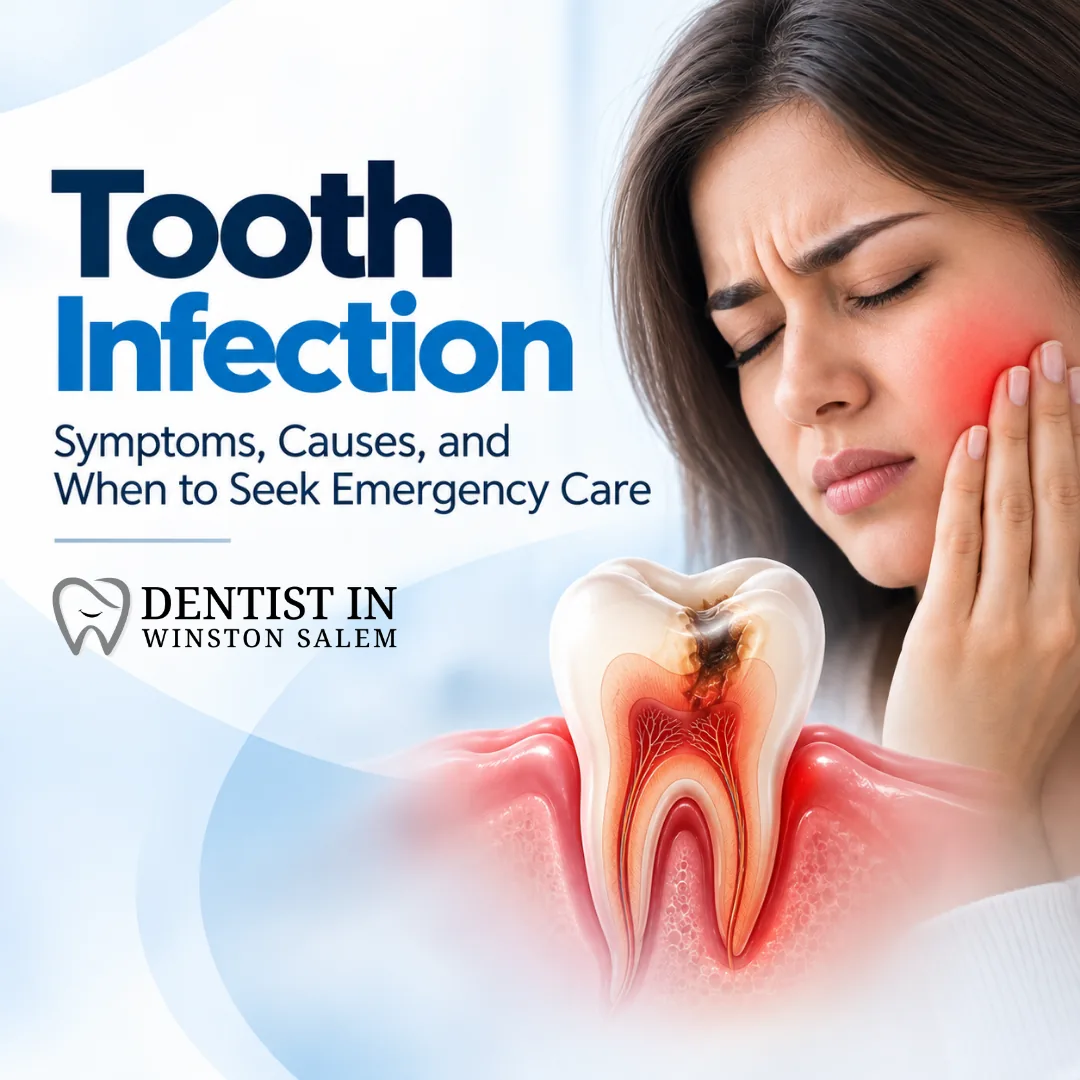
Tooth infection often starts as a dull toothache that will not go away. People may feel sensitivity to hot or cold, pressure, or mild gum tenderness. They may notice a bad taste that comes and goes.
A tooth abscess is a pocket of pus caused by a bacterial infection. A fever with dental pain means the infection may have spread and needs emergency care. Here you will know about the common symptoms, causes, and red flags like swelling, swollen lymph nodes, difficulty swallowing, or trouble breathing.
Tooth infections can cause intense pain and discomfort. Common signs include swelling, fever, and toothaches that won't go away. Bacteria often lead to these infections, typically from untreated cavities or gum disease. Risk factors such as poor oral hygiene and a weakened immune system also contribute to the problem.
A tooth infection often starts with mild to moderate toothache symptoms. People may experience sensitivity to pressure or temperature. Localized gum tenderness near the affected tooth can also occur.
A bad taste that comes and goes sometimes signals an early infection. Swollen lymph nodes, facial swelling, fever, and a general feeling of being unwell indicate that the infection has spread beyond the tooth.
Dental pain accompanied by a fever shows urgency; this situation requires emergency care. Severe signs like difficulty swallowing or breathing also demand immediate attention from healthcare professionals. Being aware of these warning signs helps ensure timely treatment for any potential dental issues.
Dental infections often arise from untreated cavities or gum disease. Bacteria invade the tooth, leading to a dental abscess. Risk factors include poor oral health habits, such as infrequent brushing and flossing.
Smokers and people with weakened immune systems face higher risks for tooth infections. A bad taste that comes and goes can signal an infection developing in the mouth.
Some may experience mild to moderate toothache symptoms like sensitivity to pressure or temperature. Severe pain often accompanies facial swelling or fever above 100.4°F; both indicate urgent care is needed right away.
Swollen lymph nodes signify that an infection has spread beyond the local area; it shows that immediate action must be taken for effective treatment. Uncontrolled bleeding is another severe symptom linked with serious infections that should not be delayed under any circumstances.
Severe symptoms signal a tooth infection that requires immediate action. Pain, swelling, and fever often indicate the need for urgent dental assistance.
Lymph nodes may swell when a tooth infection spreads. Severe facial swelling also indicates a serious issue. Fever over 100.4°F accompanies dental pain and signals an urgent need for care. Difficulty swallowing or breathing are critical signs that require immediate medical help. Abandoning these symptoms can lead to severe complications.
Individuals who experience intense pain should not ignore it. A bad taste in the mouth can signal trouble as well, suggesting the presence of an abscess. Uncontrolled bleeding adds to the urgency; delays in seeking treatment can worsen outcomes significantly.
Tooth infections can become serious quickly. Severe pain, facial swelling, and fever signal a need for emergency dental care. Patients should visit an emergency room or an urgent dental clinic immediately if they experience these symptoms. Uncontrolled bleeding also requires fast medical attention.
Seeking help early is crucial. Symptoms like difficulty swallowing or breathing are signs of a severe infection that demands prompt action. For toothache accompanied by fever over 100.4°F and swollen lymph nodes, individuals must not delay in getting appropriate treatment.
Dental abscesses can worsen without timely intervention; immediate care often leads to better outcomes for oral health issues related to infections.
A toothache that gets worse is a top sign. You may see swelling of the face or gums. An abscess can cause strong pain and a bad taste. Fever and swollen lymph nodes can mean the infection spreads. These symptoms need quick attention.
A deep cavity can let bacteria into the tooth pulp. Gum disease can also let bacteria reach the roots. A cracked tooth or a failed filling can start an infection. All of these lead to pain and worsening infection.
Go for emergency care if you have severe toothache that stops you from sleeping or eating. Seek help if you have fever, spreading swelling, or trouble breathing or swallowing. Get emergency dental care if you see a growing dental abscess or rising pain and fever.
Dentists drain a dental abscess when needed. They may do a root canal or pull the tooth. They often give antibiotics to fight the infection. They also give pain relief for strong pain. Follow up care protects oral health.
Brush and floss daily and see your dentist for checkups. Treat cavities and gum disease early. Avoid sugar and tobacco. Good hygiene cuts the risk of infection and toothache.
Tell us a little about what you need — we'll be in touch shortly.
3210 Silas Creek Pkwy, Suite-4, Winston-Salem, NC, 27103, United States

Hi! I'm Tooth fairy! Your AI Assistant Ask me anything