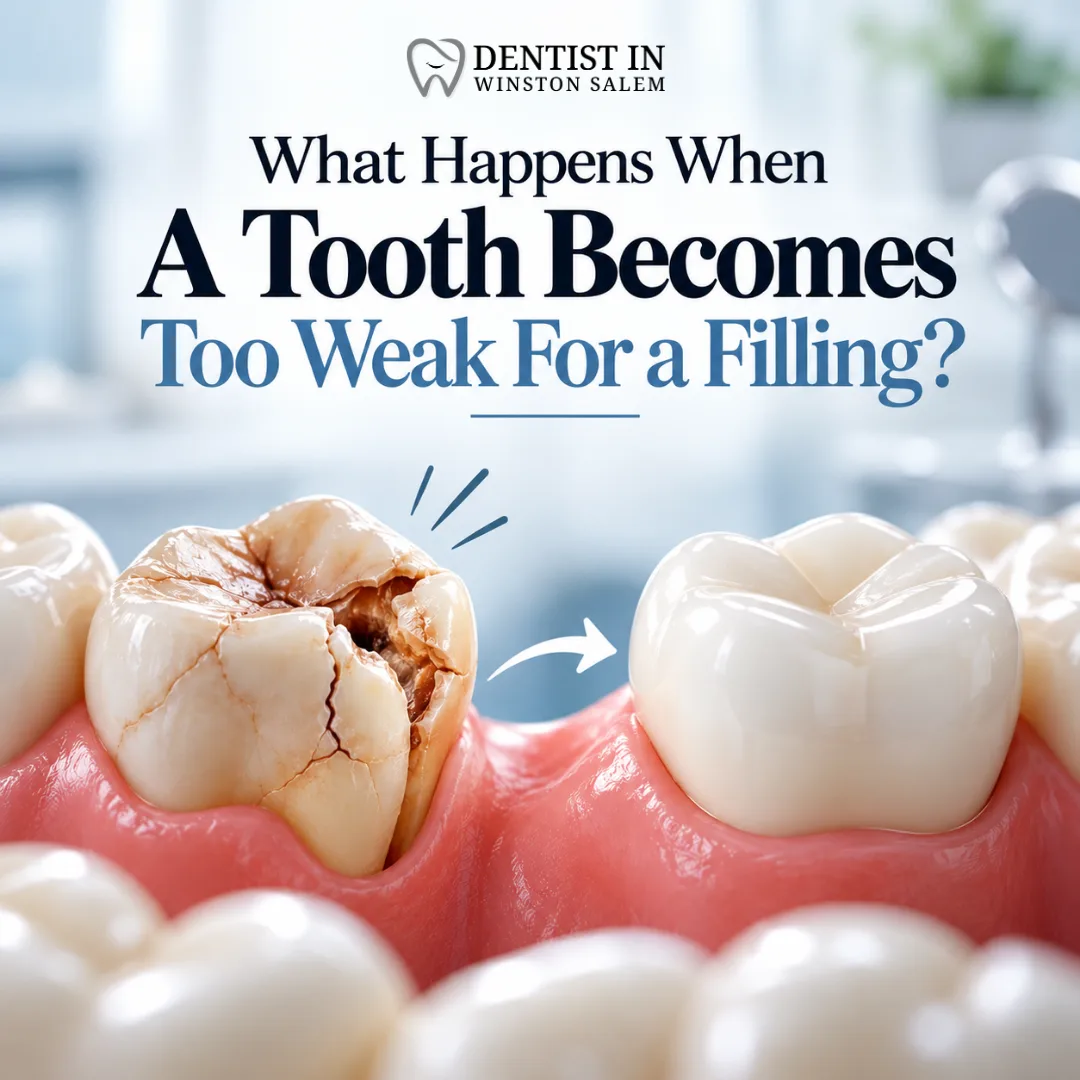
Many people feel a sharp pain or a loose filling and worry what to do next. When a filling is large or recurrent decay is extensive, there may not be enough tooth structure left to hold a new filling.
A tooth can feel fine one day and hurt the next. A patient recalled a filling falling out and a sudden sharp bite pain.
Following the signs, the risks can climb fast. Decay around a filling eats into the tooth. The filling can lift away. Bacteria move in through the gap. This causes more tooth decay and dental pain.
If a filling falls out, waiting too long lets the cavity grow. Loose fillings let bacteria invade quickly. A partially loose filling may feel like an edge the tongue can detect. Lingering tooth sensitivity to temperature or sweets often signals a failing filling. Dentists call for filling replacement or dental restoration before the problem worsens.
Left untreated, the weak tooth faces worse outcomes. Sharp pain or pressure when biting shows the tooth cannot support its filling. If the filling surface sits above the bite line, it takes extra force and causes intense pain.
Trauma to the tooth speeds decay around the filling and weakens the structure. Small gaps at the filling edge let temperature changes and bacteria slip in. That can lead to infection, a root canal, extraction, or implant later. Prompt dental care protects oral health and may avoid bigger procedures.
A dental crown often serves as a reliable fix for weak teeth. It provides strength and stability, making chewing easier. By covering the damaged tooth entirely, crowns can save it from further decay.
A crown caps a weak tooth and restores shape, function, and dental restoration. Dentists suggest crowns when a filling is large or decay keeps returning and not enough tooth structure remains for a new filling.
Decay around a filling can lift the restoration and let bacteria invade the exposed area. Patients may feel an edge with their tongue if a filling sits partially loose.
Lingering sensitivity to temperature or sweets and sharp pain on biting often signal a failing filling and a weakened tooth. If a filling sits above the bite line, it absorbs extra force and creates intense pressure and dental pain.
Trauma can cause decay around a filling and weaken the tooth further. Should a filling fall out, waiting raises the risk of more tooth decay, infection, root canal, crown placement, or extraction.
Crowns join other treatment options like inlays, onlays, bridges, implants, and temporary filling strategies in dental care and pain management.
Getting a dental crown starts with an initial consultation. The dentist examines the tooth and takes X-rays to check for damage. They prepare the tooth by removing decay and reshaping it.
Then, they create a mold for the crown, which may take a few days to make. After that, they place a temporary crown on the tooth while you wait. When the permanent crown is ready, they’ll remove the temporary one and carefully fit the new crown in place.
An initial consultation sets the stage for a dental crown procedure. It allows the dentist to assess the tooth's condition and decide the best course of action.
Undergoing this initial phase is crucial for successful dental restoration, especially when addressing potential complications from existing cavities or decay around fillings.
Getting a permanent crown is an essential step in restoring a weak tooth. This procedure helps protect the tooth from further decay and damage.
A permanent crown restores function while protecting against further weakness and decay in oral health. Next comes exploring alternative solutions for weak teeth if crowns aren’t suitable.
When a tooth weakens, treatments like inlays or onlays offer solid options to restore strength and function. Tooth extraction can also be necessary, but many people prefer exploring less invasive solutions first
Inlays and onlays serve as alternative solutions for weakened teeth that cannot support a regular filling. These custom-made restorations fit into or cover the tooth structure effectively, providing strength and stability.
They help seal off areas where decay exists, preventing further dental issues. Patients often benefit from their durability and natural appearance.
Onlays cover larger areas of the tooth while inlays sit snugly inside cavities. Both types can enhance a patient's oral health by protecting against bacteria and decay. Choosing these options allows individuals to keep more of their natural teeth intact compared to extraction or crowns. Exploring all treatment choices ensures the best path forward for maintaining healthy teeth.
Tooth extraction occurs when a dentist removes a tooth that is too weak to support any restoration, like a filling. The dentist may suggest this if decay causes severe damage or trauma affects the tooth's structure.
After extraction, implants become an option for replacement. An implant consists of a metal post placed in the jawbone and topped with a crown that mimics the natural tooth.
These implants provide stability and function similar to real teeth. They help maintain oral health by preventing bone loss, which can happen after losing a tooth. The process requires careful planning and sometimes multiple appointments before placing the crowns securely on top of the implants.
Treatment options vary based on individual needs and conditions, making it essential for patients to have open discussions with their dentists about possible solutions for maintaining healthy smiles.
Treating a weak tooth right away offers several benefits. Addressing the problem quickly prevents further decay, which can worsen over time. A loose filling allows bacteria to invade, leading to an increased risk of infection or additional cavities.
For example, someone may feel sharp pain when biting down on food due to weakened tooth structure; this discomfort signals that prompt action is necessary.
Quickly replacing a loose filling or getting a dental crown helps restore strength and functionality. Ignoring these signs can lead to more complicated procedures like root canals or extractions later on.
Patients who take care of their weak teeth promptly often enjoy better oral health overall, avoiding the painful consequences of waiting too long for treatment.
When a tooth becomes too weak, it cannot hold a filling properly. This can lead to pain and further damage. Your dentist may suggest other treatments like crowns or root canals.
A tooth can weaken due to decay, cracks, or wear over time. Poor oral hygiene also plays a role in weakening teeth. If these issues are not addressed promptly, fillings may no longer be effective.
Look out for persistent pain, sensitivity to hot or cold foods, and visible cracks on your tooth's surface. If you notice any of these signs, visit your dentist right away; they will assess the situation.
Eating may be tricky with an unstable tooth; certain foods could worsen the problem or cause discomfort. It’s best to avoid hard or sticky items until you see your dentist for proper care.
Tell us a little about what you need — we'll be in touch shortly.
3210 Silas Creek Pkwy, Suite-4, Winston-Salem, NC, 27103, United States

Hi! I'm Tooth fairy! Your AI Assistant Ask me anything