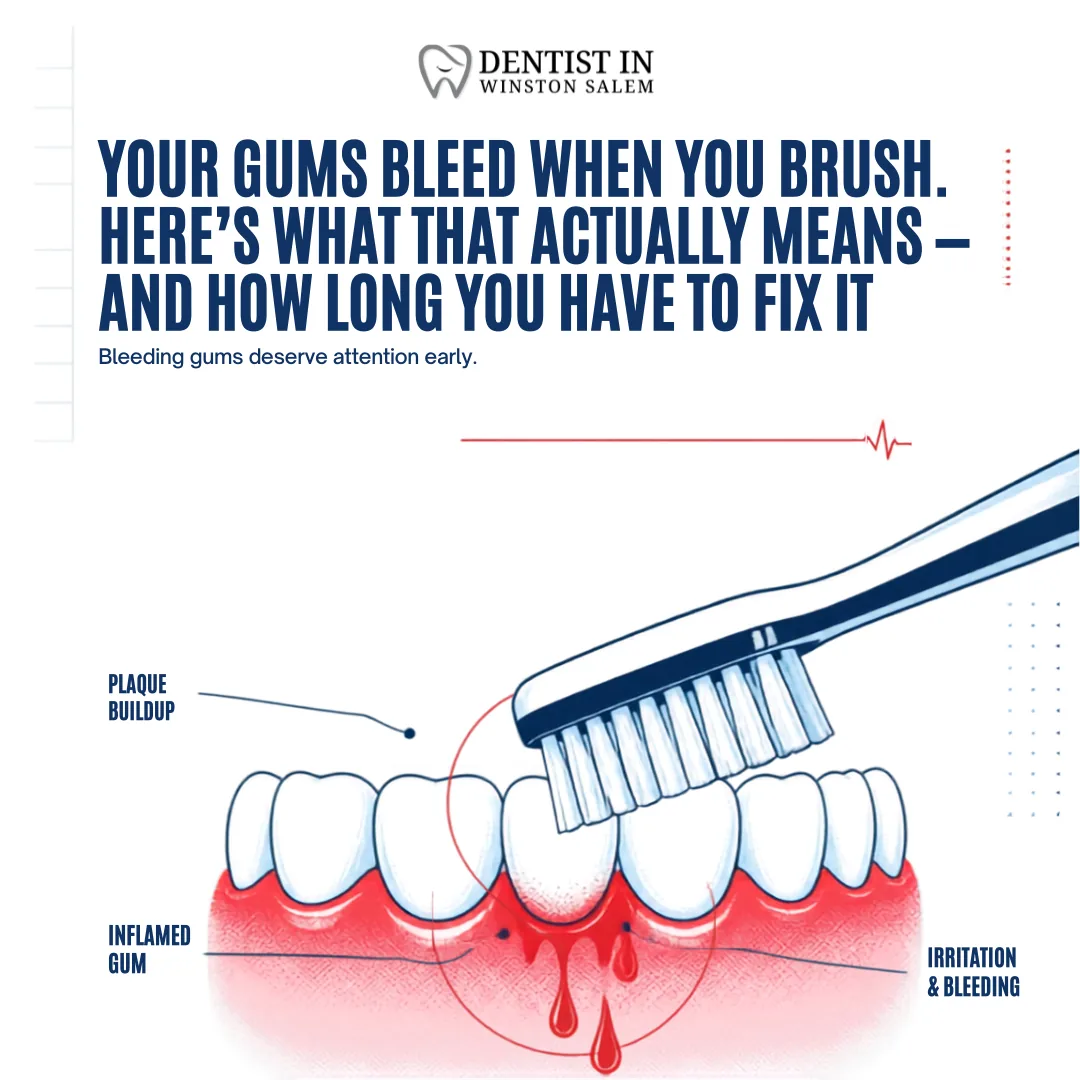
Many people notice bleeding when they brush their teeth. This can alarm them and raise questions about gum disease, plaque buildup, or other oral health issues.
Bleeding gums often signal inflammation at the gumline, most commonly from plaque buildup and early gingivitis. Here you will know about common causes like poor brushing and flossing, brushing too hard, vitamin deficiency, pregnancy changes, and new flossing routines.
It will show simple steps for dental care, how long healing may take, and when to see a dentist.
Bleeding gums often signal underlying health issues. Many people experience this symptom due to gum disease or gingivitis. Poor brushing and flossing habits contribute significantly to these conditions.
An infection can occur in the tissues that hold teeth in place, resulting from plaque buildup around the gums. Inflammation at the gumline typically causes irritation, leading to bleeding.
Brushing too hard or using a hard-bristled toothbrush also irritates gums and promotes bleeding. Hormonal changes during pregnancy may cause some individuals to notice bleeding when they brush their teeth.
Any random instance of bleeding should prompt a visit to a dental professional for evaluation, especially if it persists beyond one week. Bleeding gums are often an indication of poor oral hygiene practices that need improvement for better mouth health.
Bleeding gums signal inflammation at the gumline. This often means plaque buildup has irritated the area. If someone experiences gum bleeding for over a week, they should see a dentist for evaluation. Addressing this issue early can prevent serious conditions like gingivitis or gum disease later on.
Improving oral hygiene practices is crucial to stopping bleeding gums. Brushing gently with a soft-bristled toothbrush and flossing regularly are essential steps in dental care. Maintaining good habits can help reduce plaque accumulation and inflammation effectively.
Hormonal changes may affect some people's gums, especially during pregnancy; so adjustments in routine might be necessary then as well. Following these steps will greatly enhance overall mouth health and treat any underlying issues promptly.
Bleeding often comes from plaque buildup that causes inflammation. This early gum disease can mean gingivitis. Poor oral hygiene and weak mouth health make bleeding gums more likely.
Mild bleeding can mean early gingivitis. If you ignore it, gum disease can get worse. Seek dental care and ask dentists about treatment options.
If it is simple gingivitis, you can improve it in days to weeks with good oral hygiene. More advanced gum disease needs longer care and professional treatment.
Use a soft toothbrush and floss every day. Clean plaque to lower inflammation. Rinse with a dental mouthwash if your dentist says it helps.
Yes, a vitamin deficiency can weaken gums and raise bleeding. Talk to your dentist about diet and possible treatment.
See dentists if bleeding lasts more than a week or if you have pain. Get a check for mouth health. They can treat gum disease and give clear treatment options.
Tell us a little about what you need — we'll be in touch shortly.
3210 Silas Creek Pkwy, Suite-4, Winston-Salem, NC, 27103, United States

Hi! I'm Tooth fairy! Your AI Assistant Ask me anything